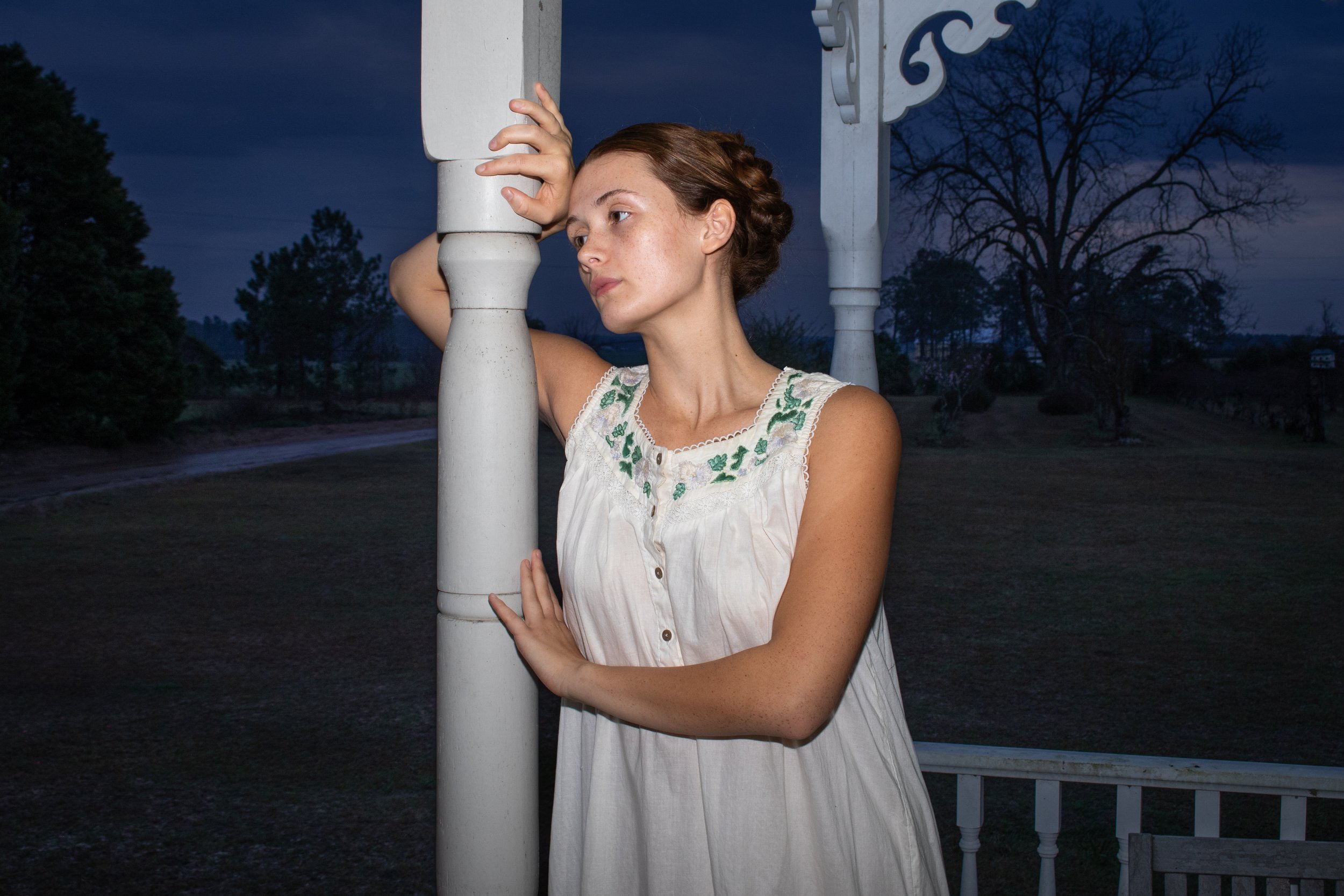
I was the sole costume designer for the independent film Awake, written and directed by Julia Bottarelli, who entrusted me with the creative freedom to expand the world of the script. Each design choice was intentional, building a visual language that deepens the narrative beyond what is explicitly shown on screen. While the cult’s costumes are uniformly white to establish cohesion, I hand-embroidered over eight garments using Victorian floriography to embed symbolism and reveal hidden facets of character.
The project spanned months of embroidery, dyeing, sewing, sourcing, and overall costume management. On set, the process became increasingly collaborative, involving continuous adjustments and close relationships with the cast. The final work reflects both a commitment to craftsmanship and a deeply character-driven design approach.
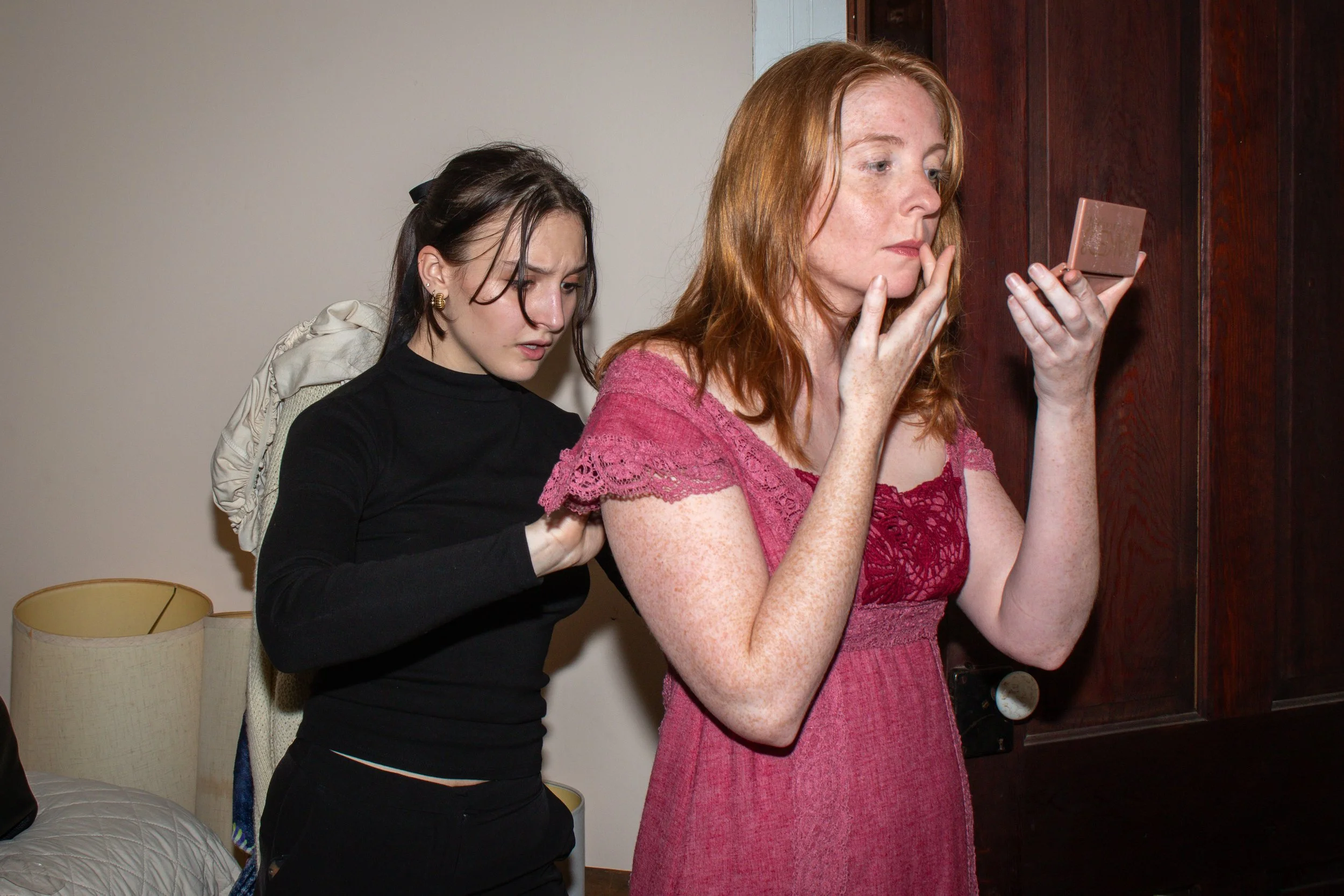
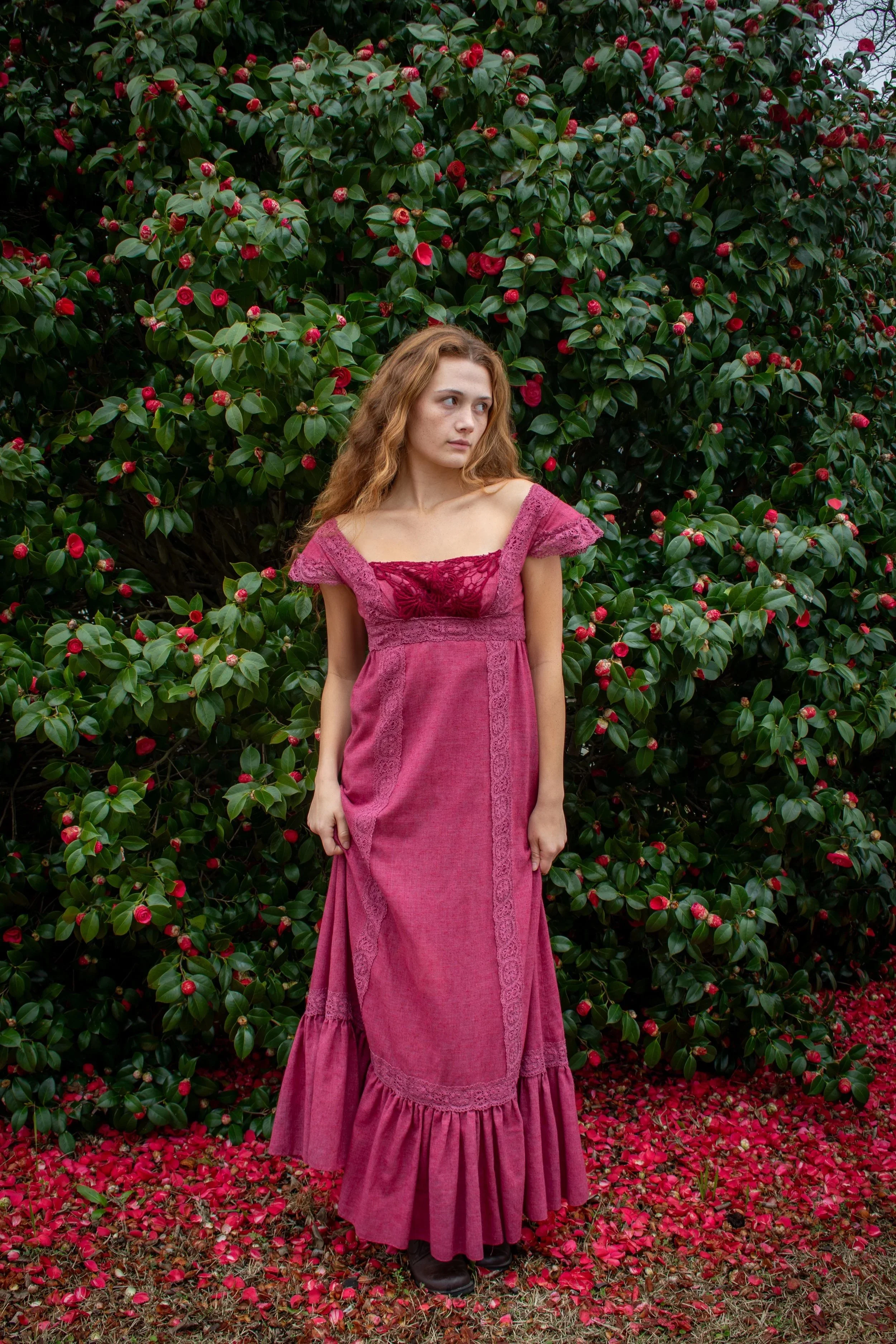
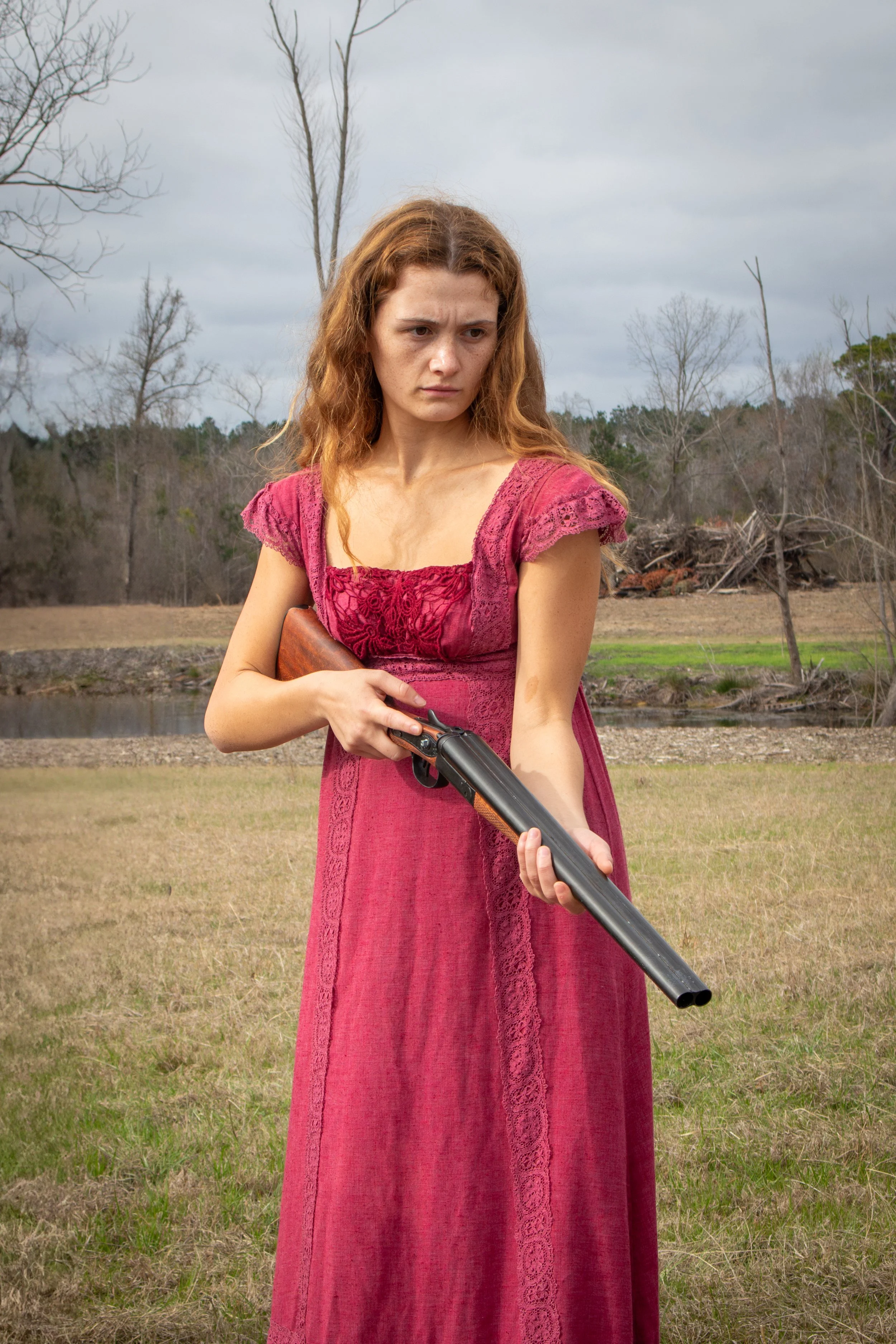
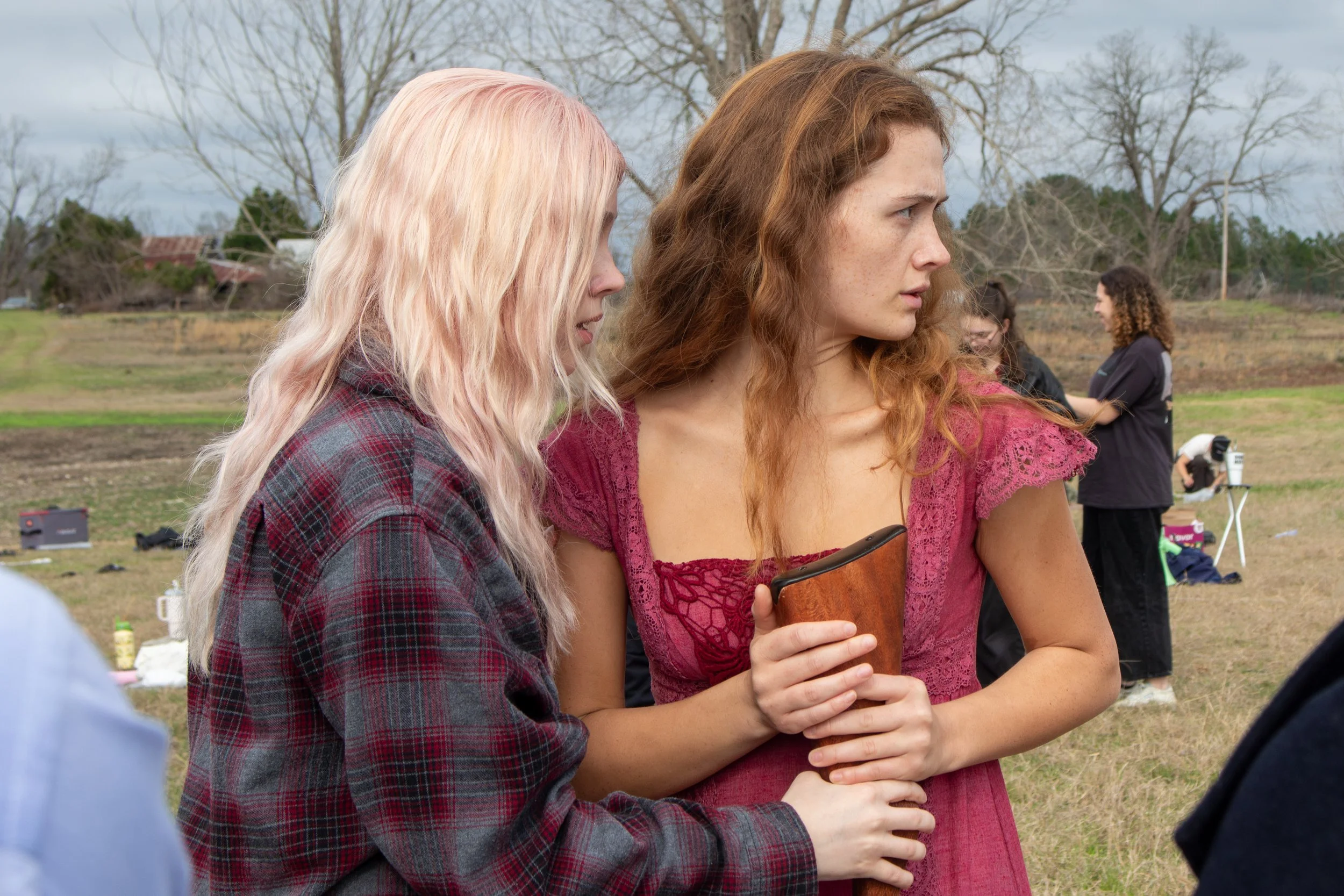
The “Awakening Dress” is a central narrative piece designed to stand apart visually both on camera and within the cult itself. I sourced a 1970s prairie wedding dress from eBay to suggest generations of women had worn it before Bethany, then altered it with additional lace trims and paneling. I installed an adjustable lace-up corset back, allowing the garment to fit multiple women and be unlaced on camera as required in the script. I also conducted countless dye tests to achieve the perfect red tone for the final garment, using fabric scraps to refine the color before committing to the full piece. The dress needed to contrast not only through color, but through its beauty and inherent sensuality, setting Bethany apart from her Family.
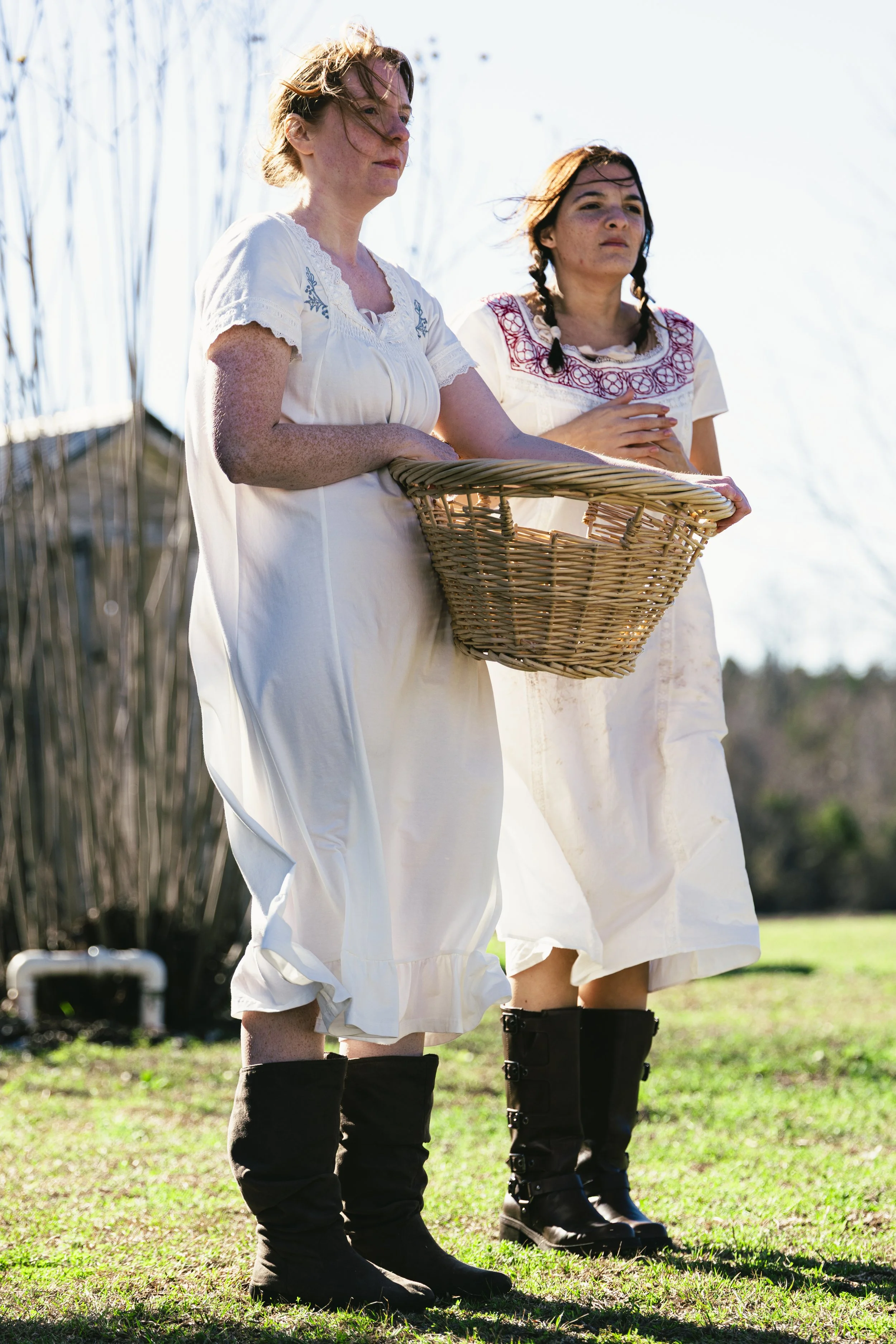
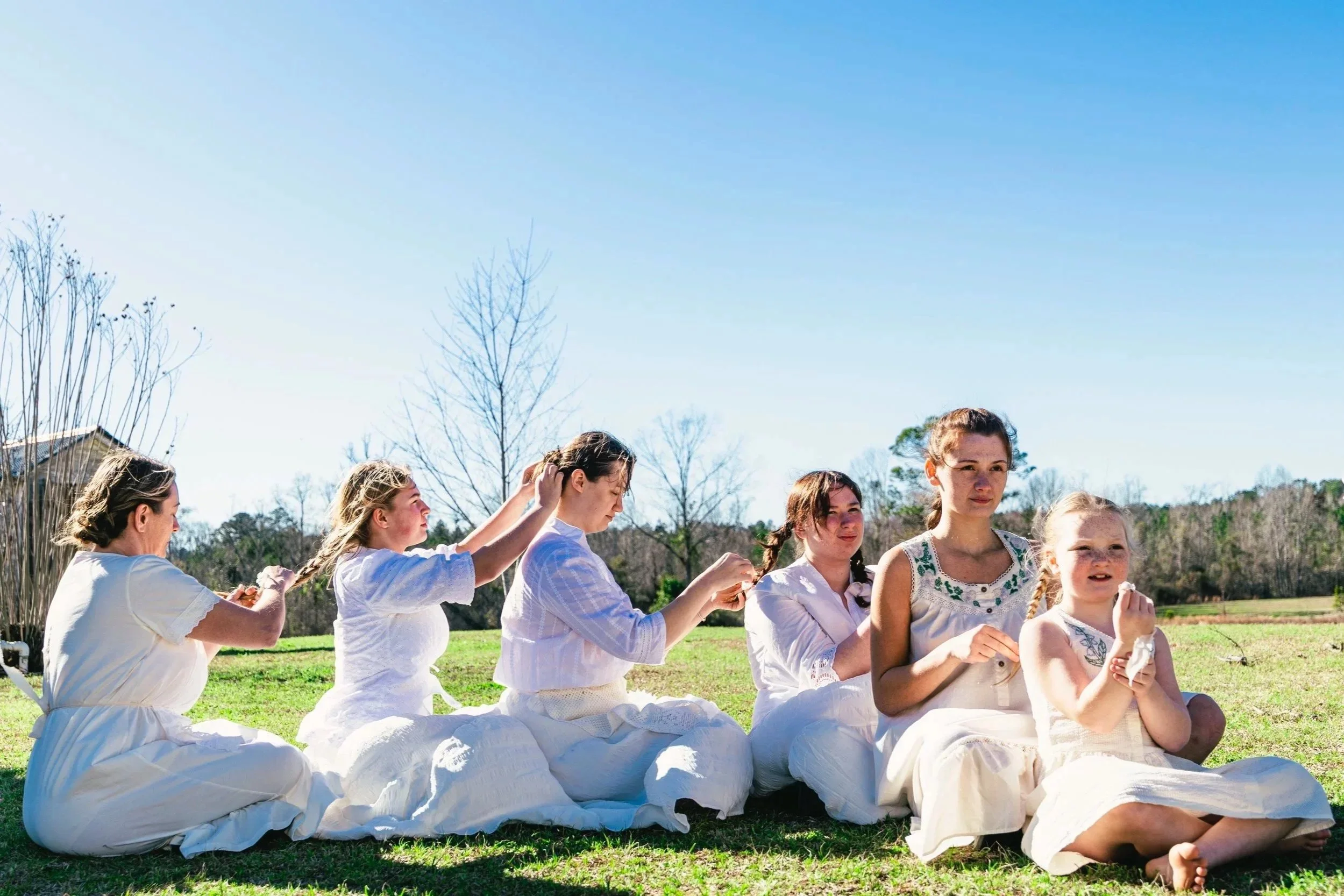
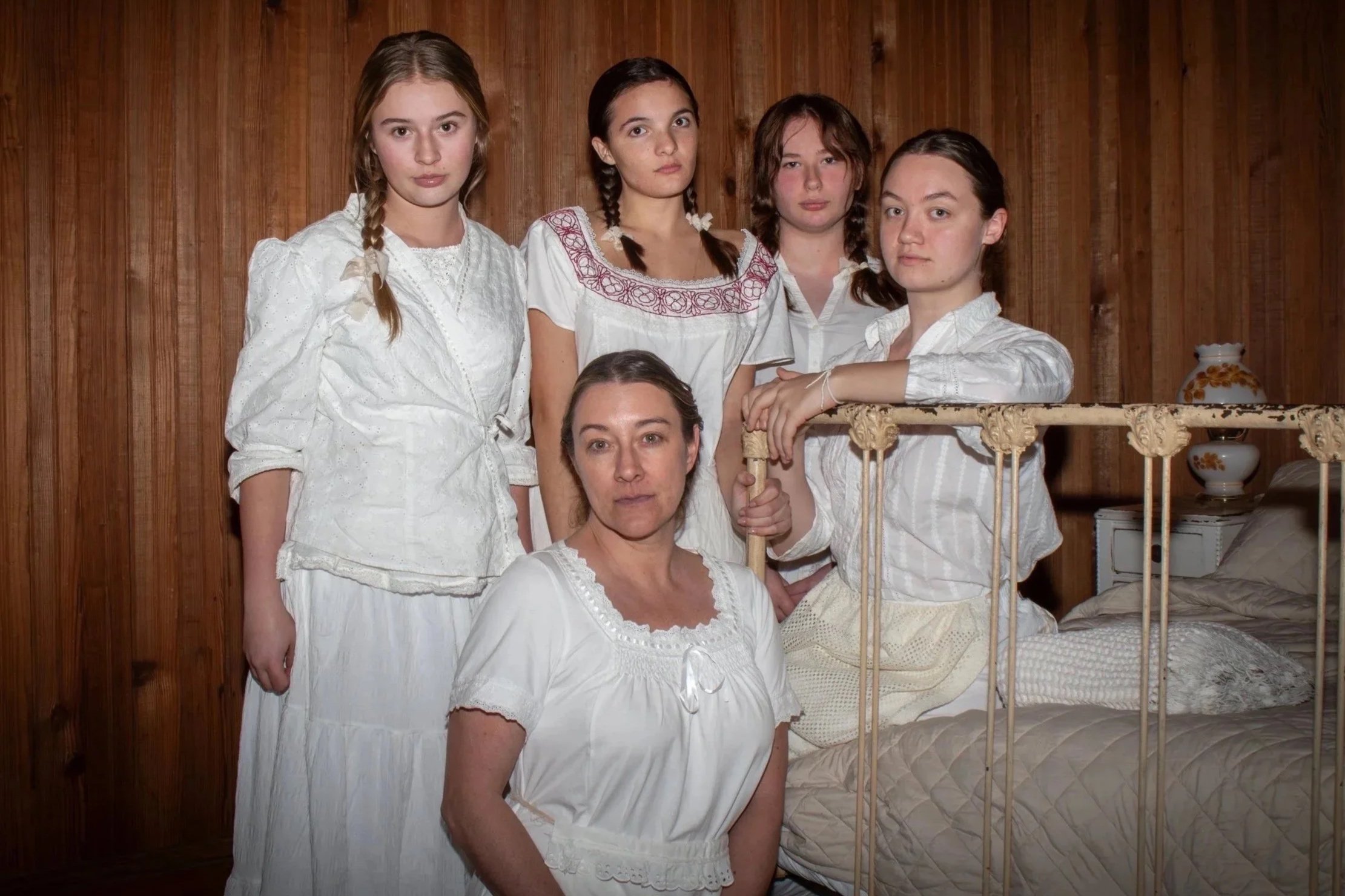
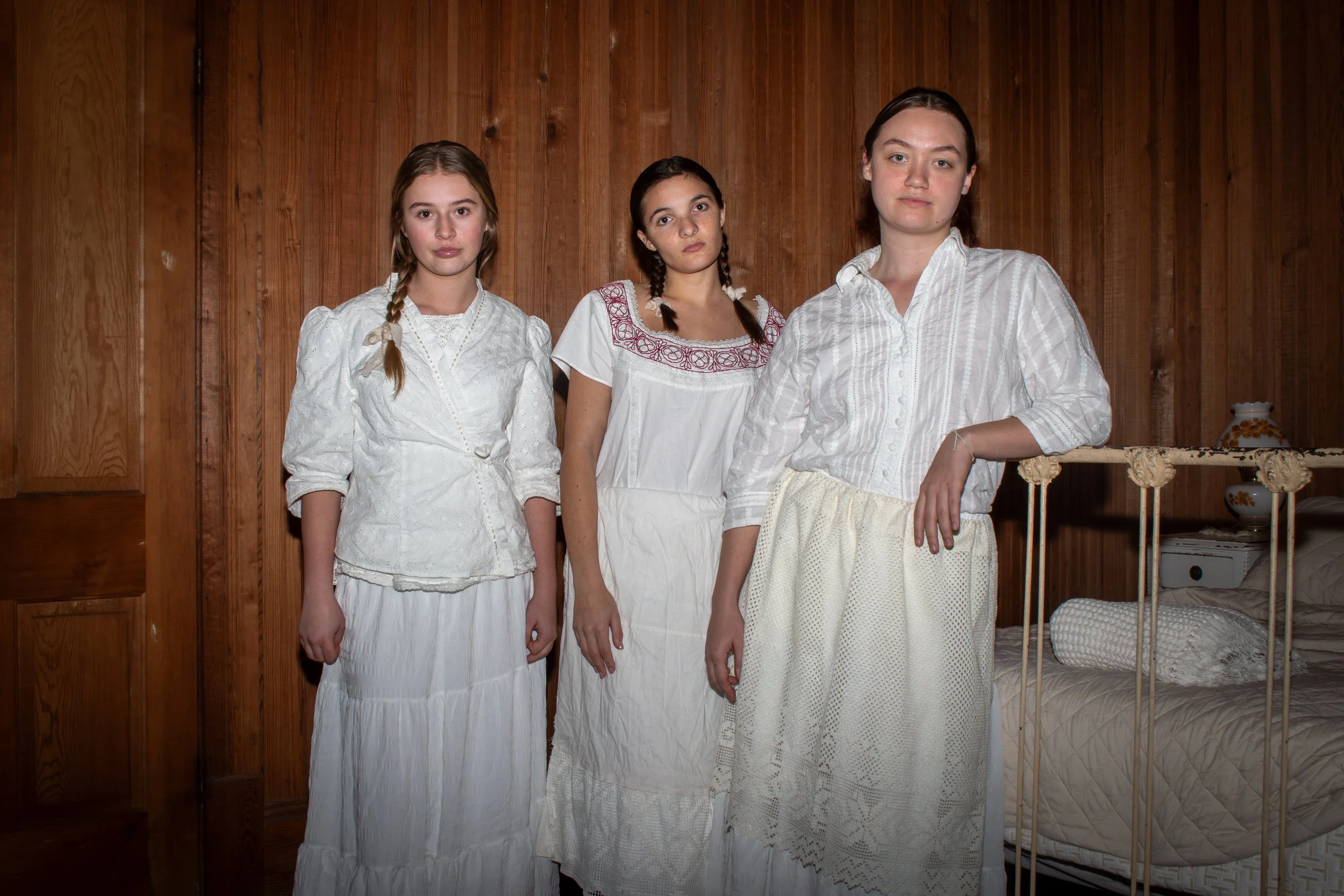
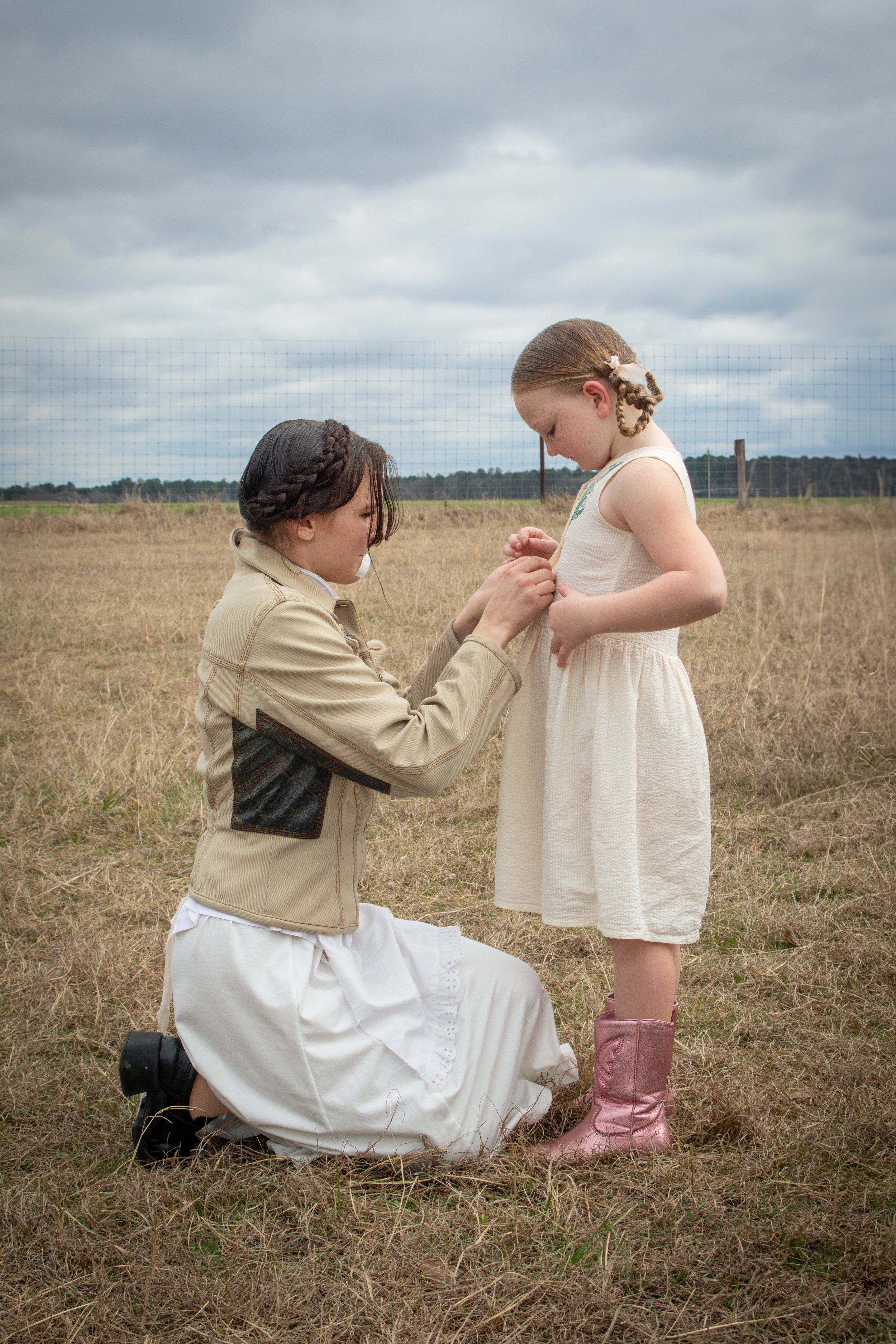
Bethany’s “family” presented a unique design challenge, encompassing not only central characters, her mother Mary, younger sister Clarisse, and fellow member Marta, but also up to fifteen background performers at a time. To create a cohesive visual world for the extras, I relied heavily on thrifted white garments, sourcing and up cycling vintage textiles and lace panels into modified aprons, hair kerchiefs, and layered garments. Even background figures were treated with careful consideration; continuity and believability were essential in this secular world. Layering became a key tool, allowing silhouettes and textures to read clearly from a distance while reinforcing a shared cultural identity.
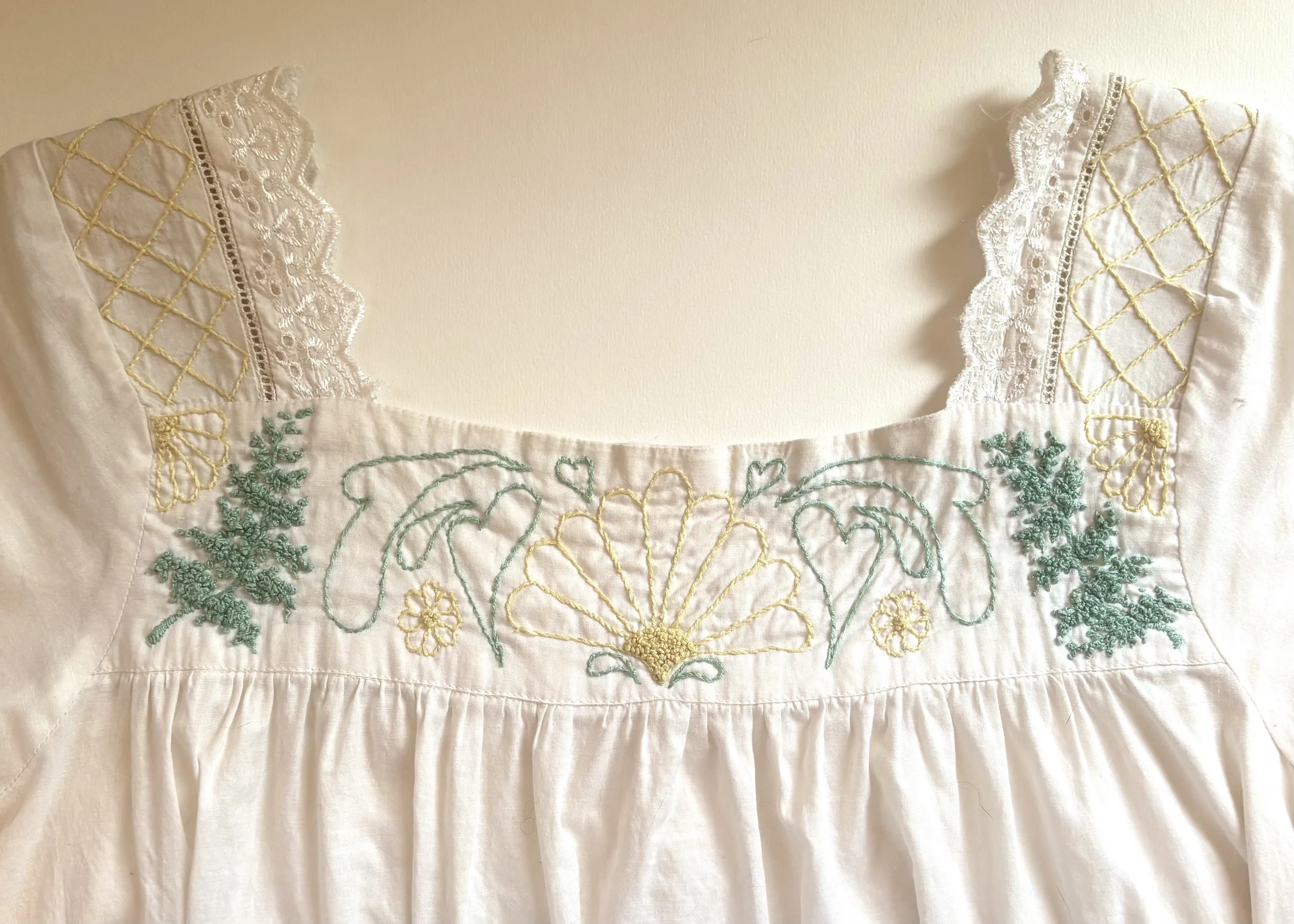
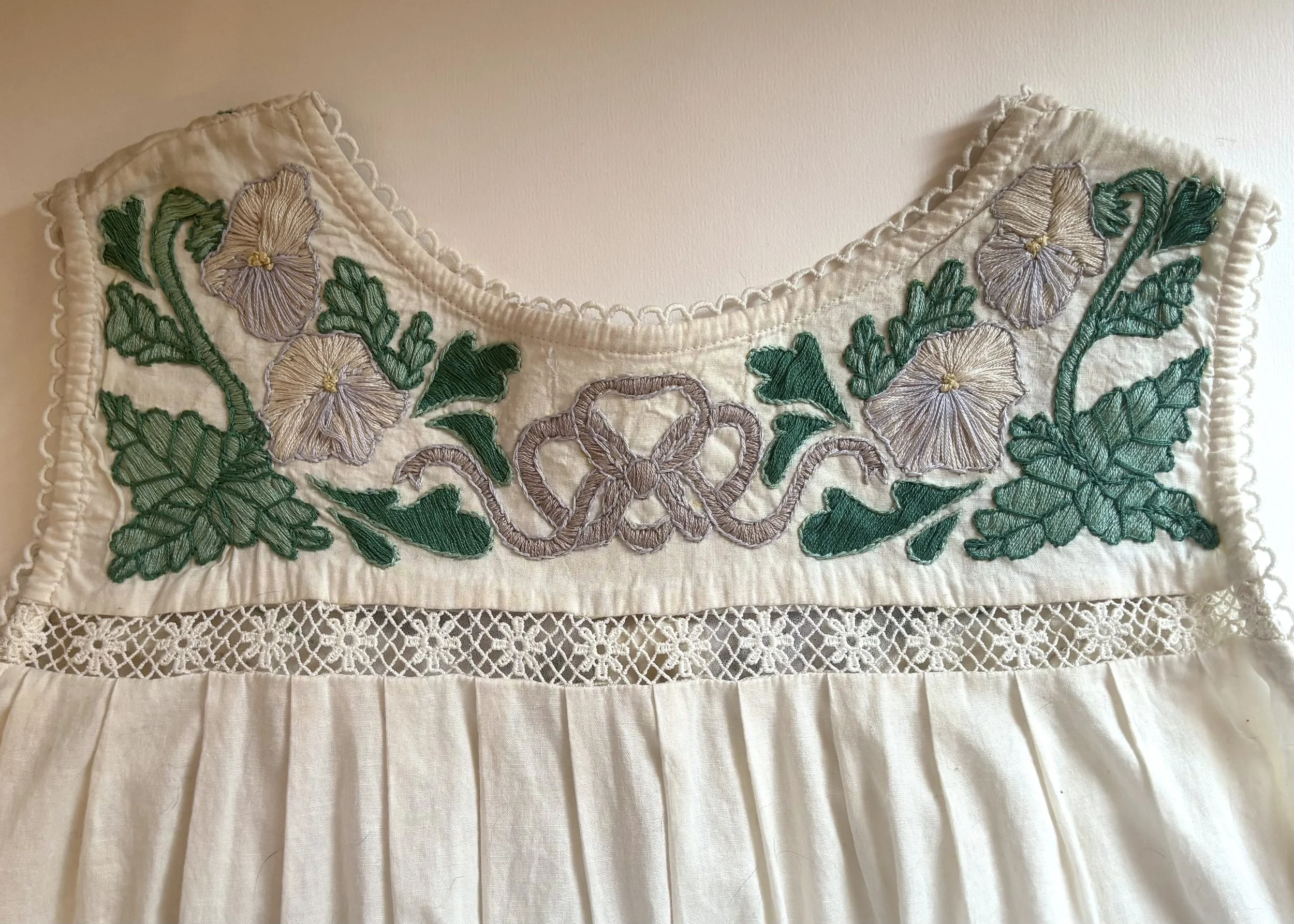
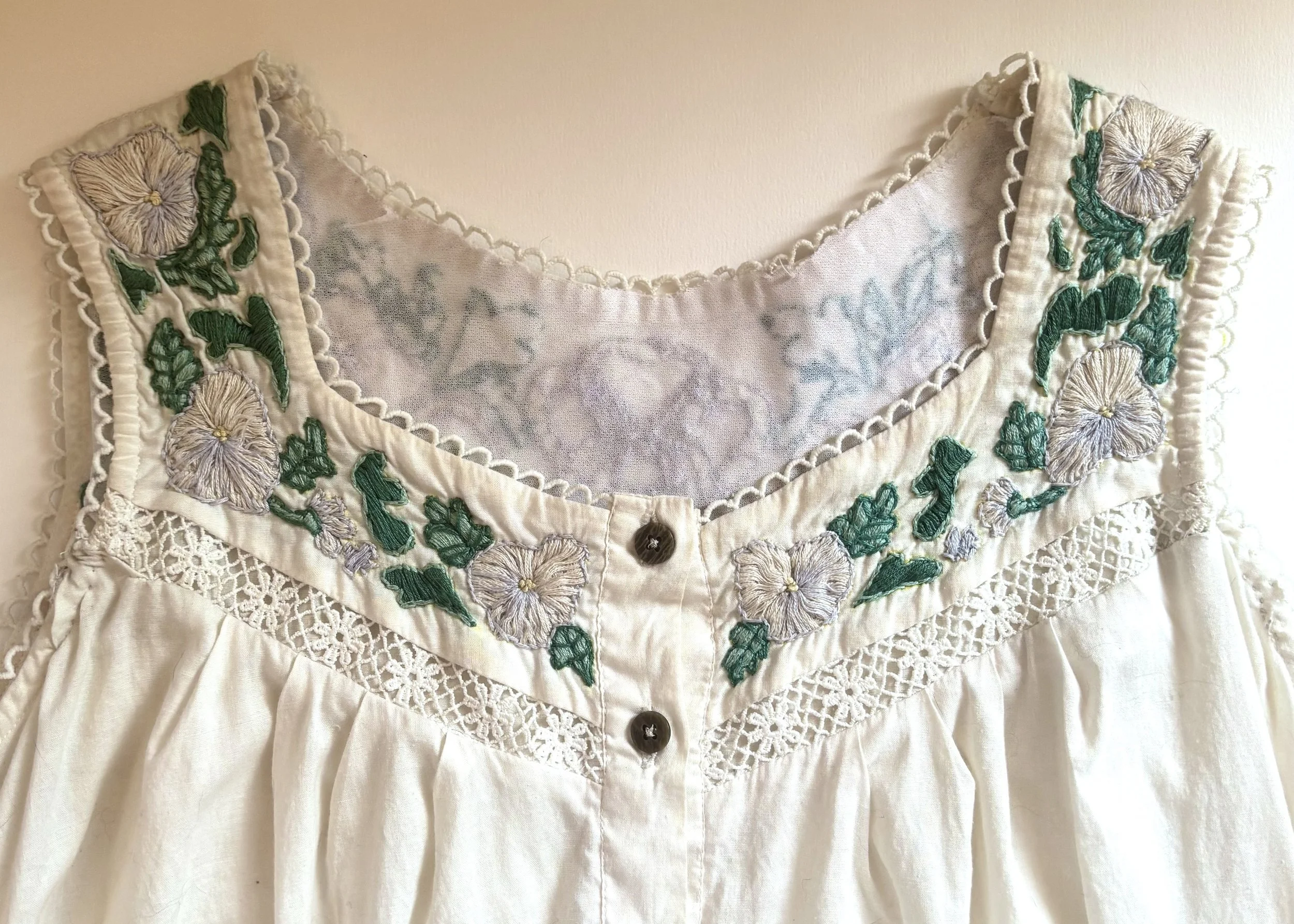
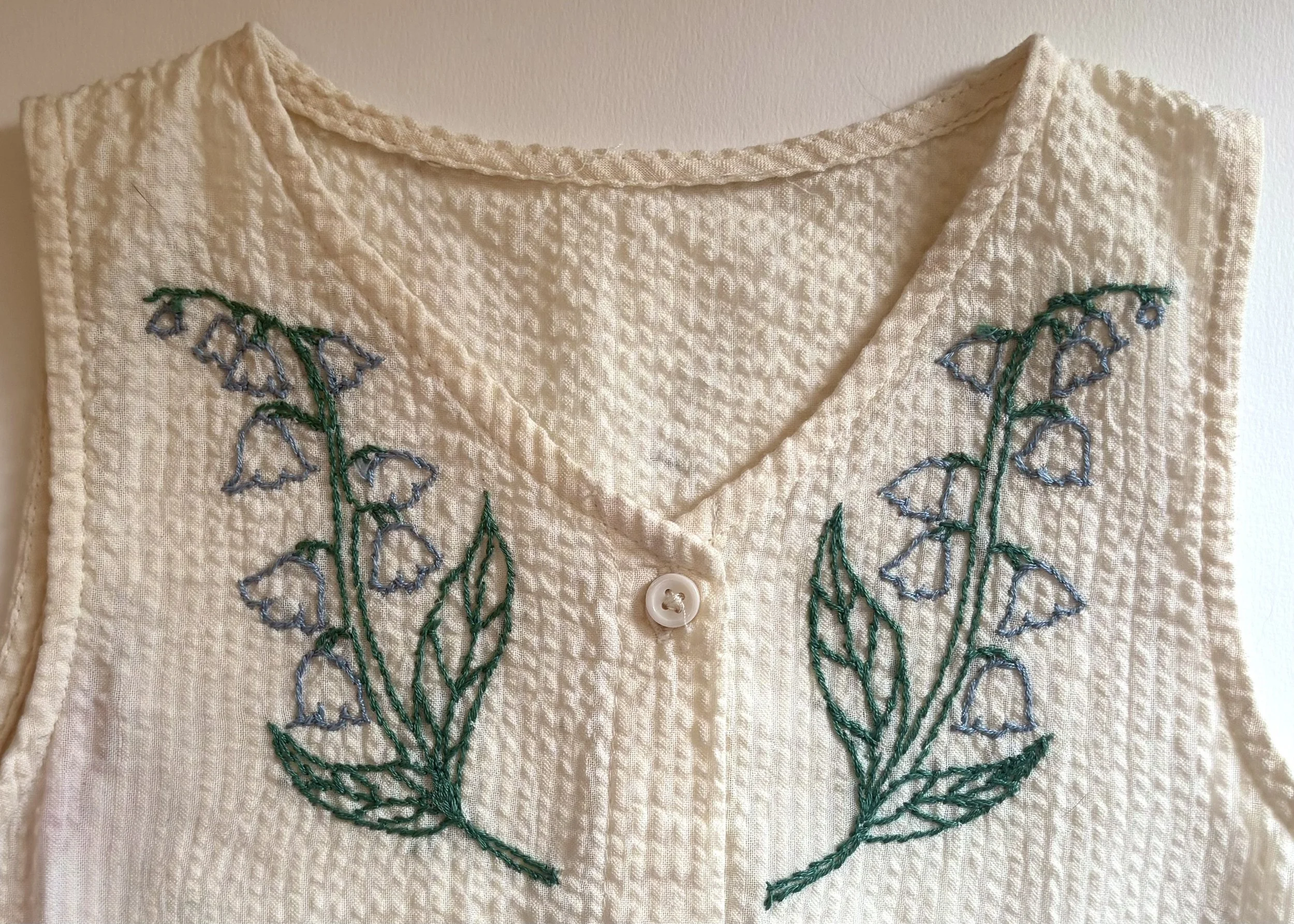
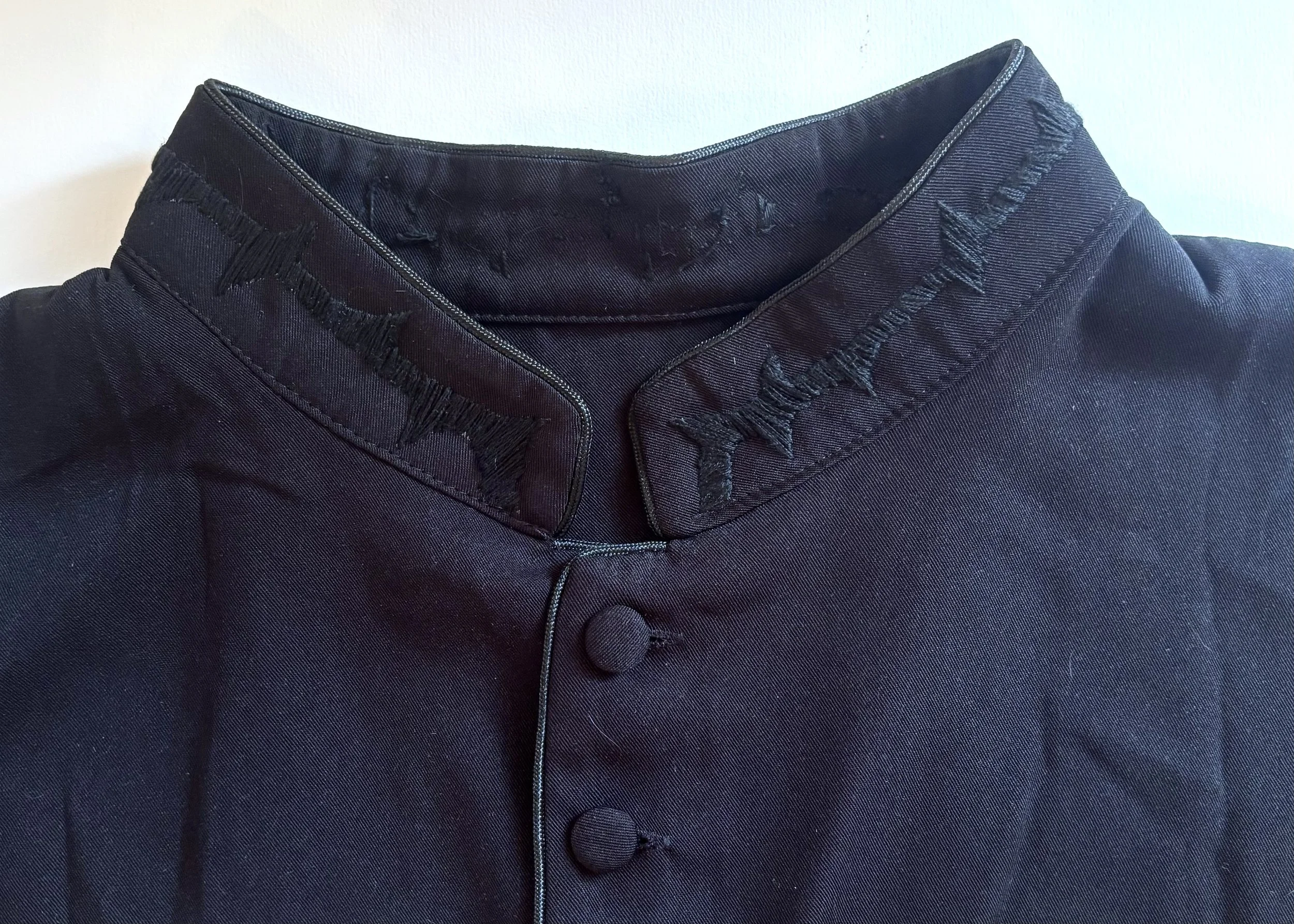
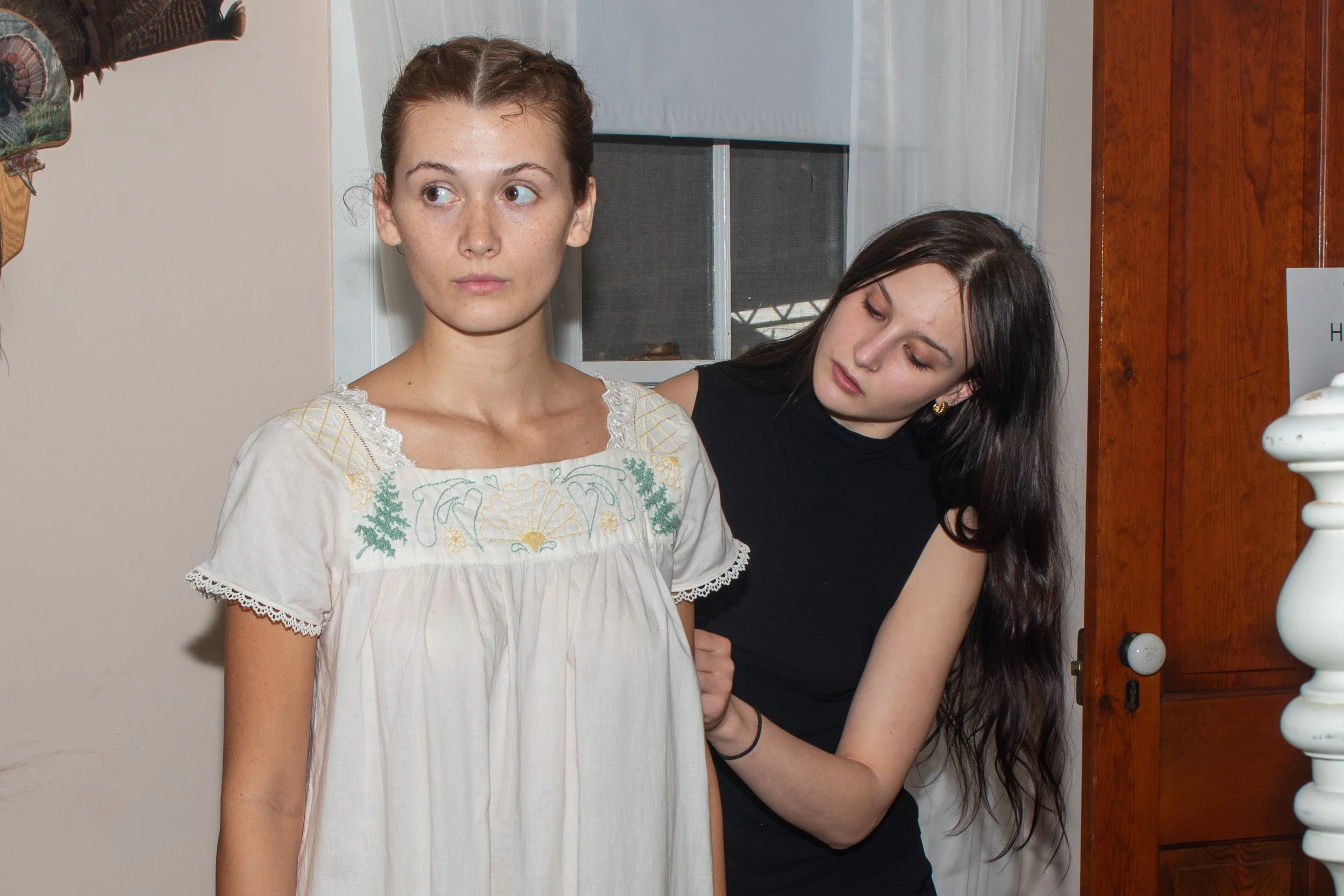
As seen in the images below, my embroidery work was rooted in Victorian floriography, with each motif chosen to subtly communicate emotional and narrative subtext for each character. Bethany’s dresses feature violets to symbolize sapphic love, paired with bow motifs representing the ties that bind. While another has daisies convey loyal love and the sentiment “I’ll never tell,” with ferns to suggest secret admiration and sincerity. In contrast, Clarisse’s dress incorporates lily of the valley to reflect innocence and purity, reinforcing her place within both the family and its moral framework. The Prophet’s clerical collar is wrapped in thorn motifs that shift subtly in the light, symbolizing sin, concealment, and control.