The opera Tristan und Isolde begins with a moment of dissonance: two separate harmonies converge to form the famous “Tristan chord,” masterfully mirroring the lovers’ doomed romance within the first few notes. The opera is constructed upon these polarities and contradictions: life and death,day and night, love and hate. In Tristan und Isolde, Richard Wagner explores this concept of dissonance through the intertwined nature of love and death—two forces simultaneously bound together and forced apart by fate like the lovers themselves.
I want to focus on developing Isolde’s psyche and character arc across the three acts, communicated through color, textile, and layering within her costumes. She embodies many facets—Irish princess, witch, bride, queen, and lover. I plan to lean into the darkly feminine and mystical aspects of her character while also using the costumes as a vehicle to express her devotion to Tristan, further reinforcing the central theme of dissonance between love and death.
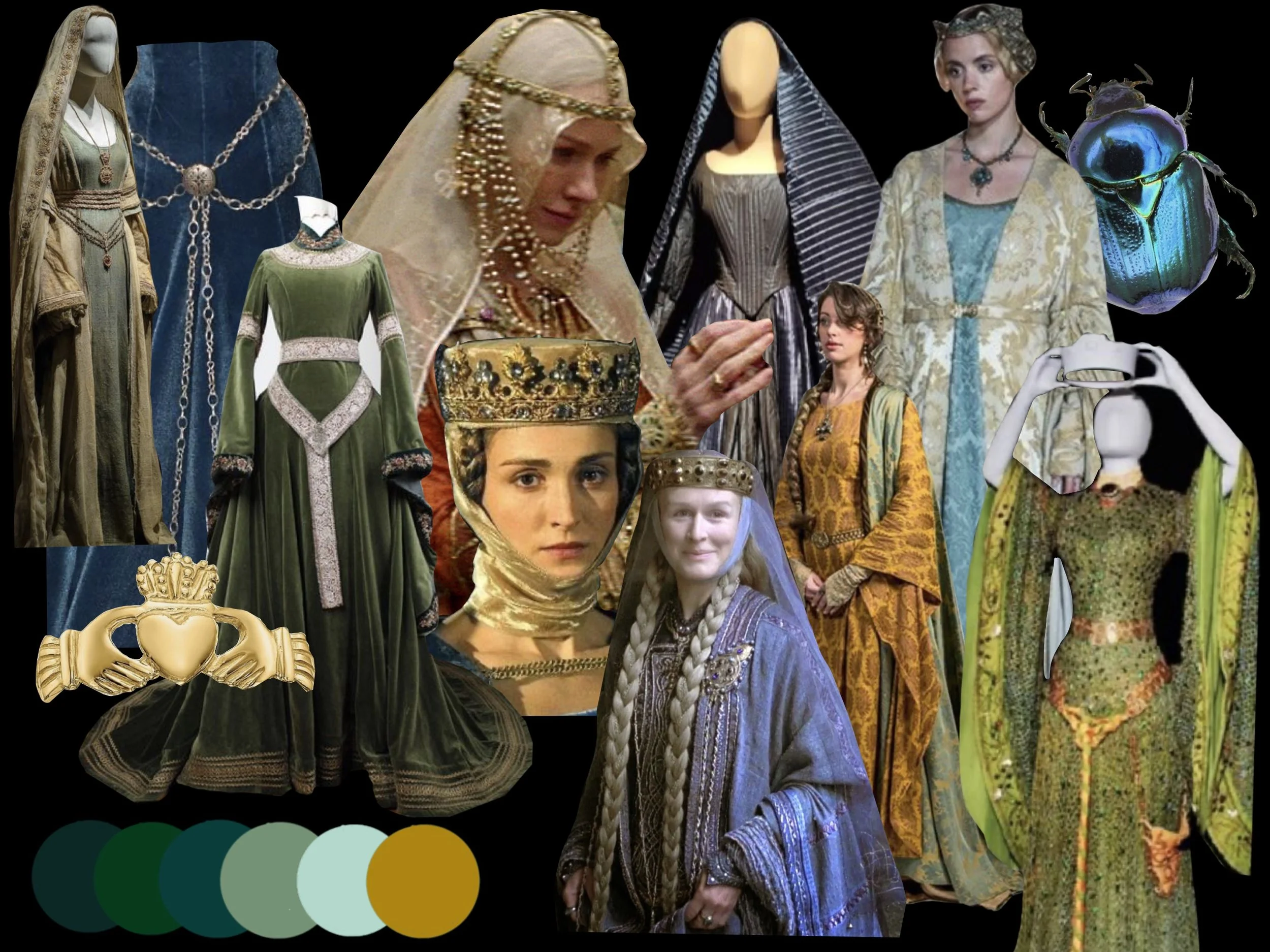
Top Image: Initial Moodboard
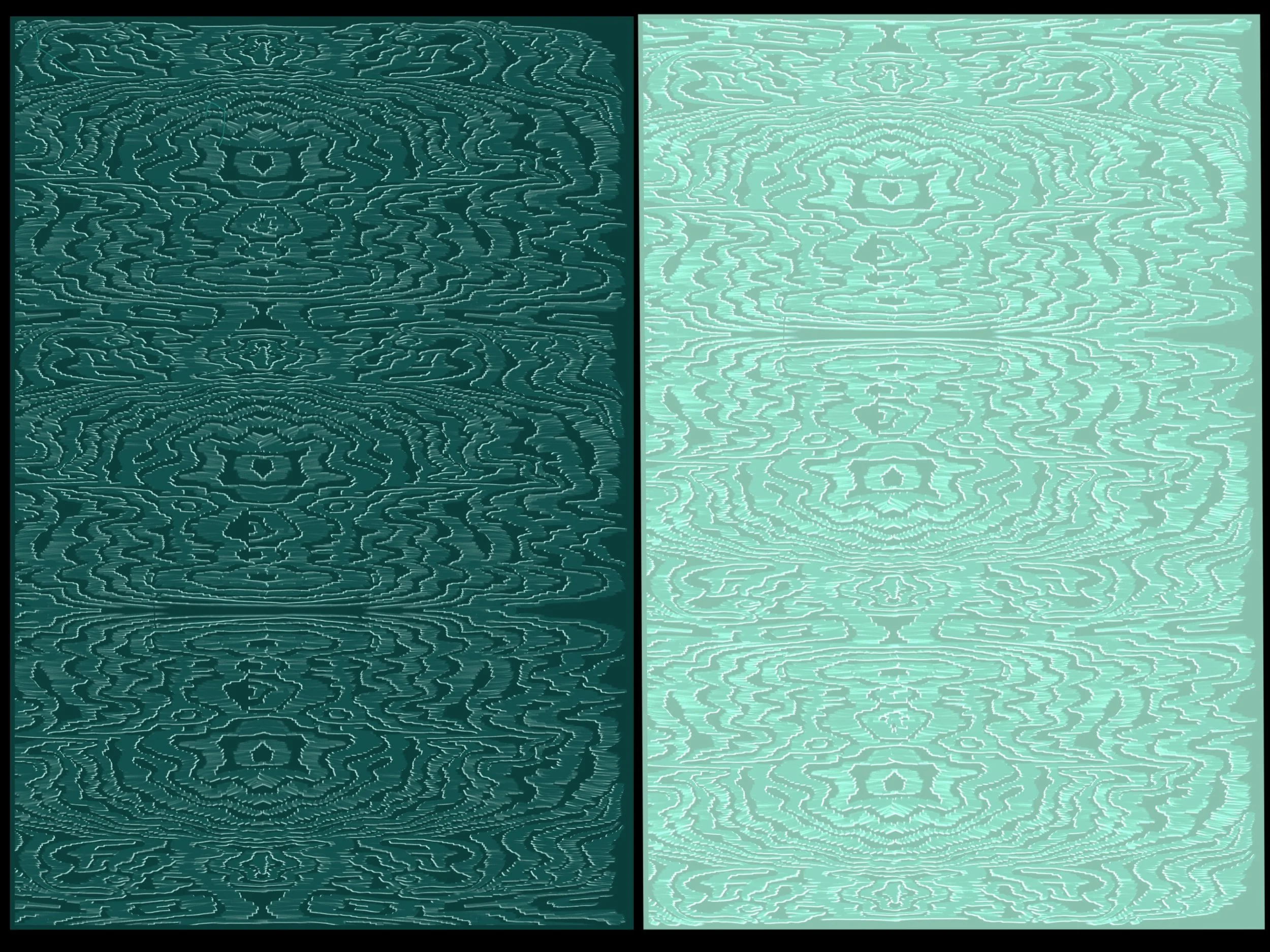
Bottom Image: Textile Patterns made by manipulating patterns of tree rings and abalone shell to connote ties to nature and time. It’s also meant to be reminiscent of moire silk.
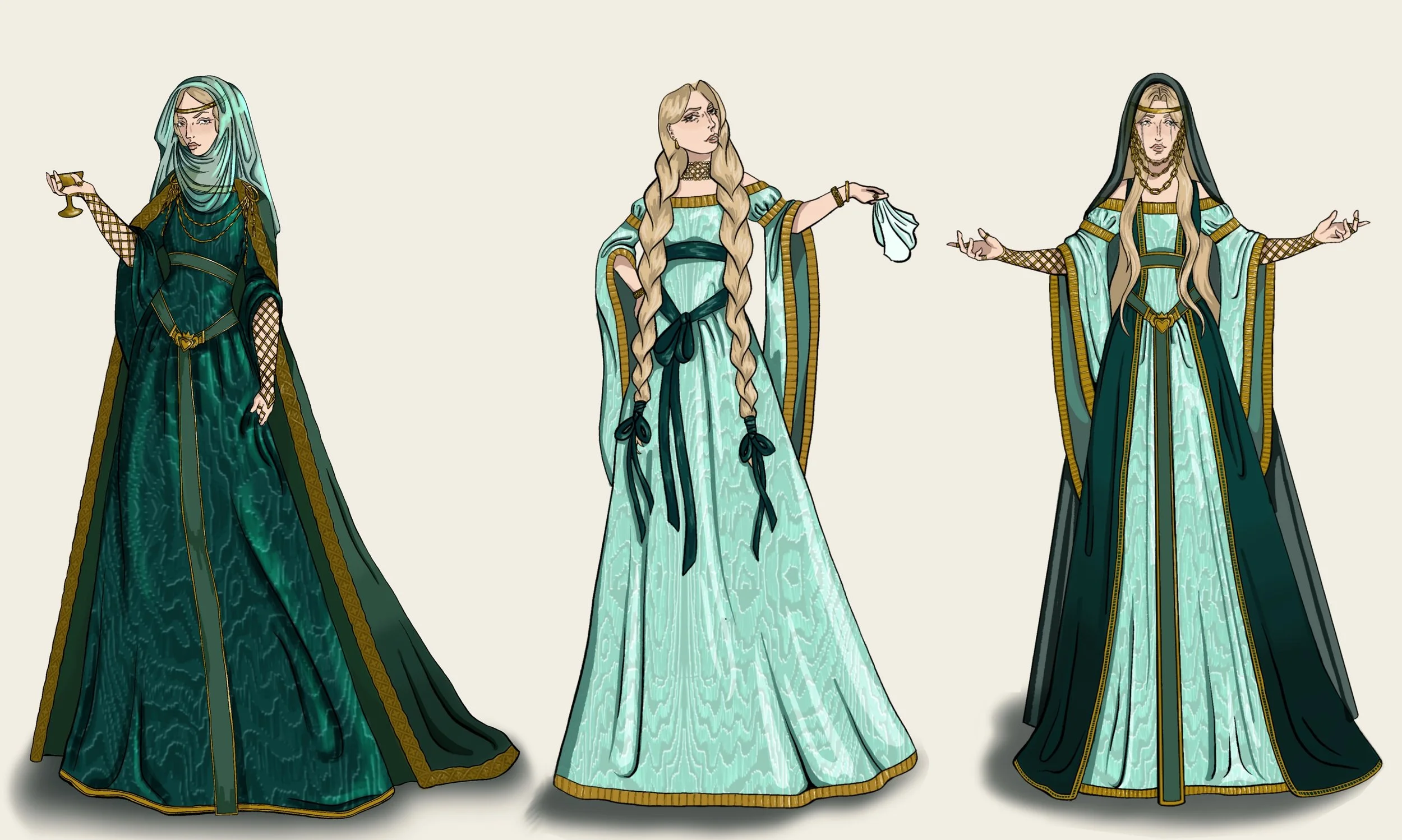
ACT 1
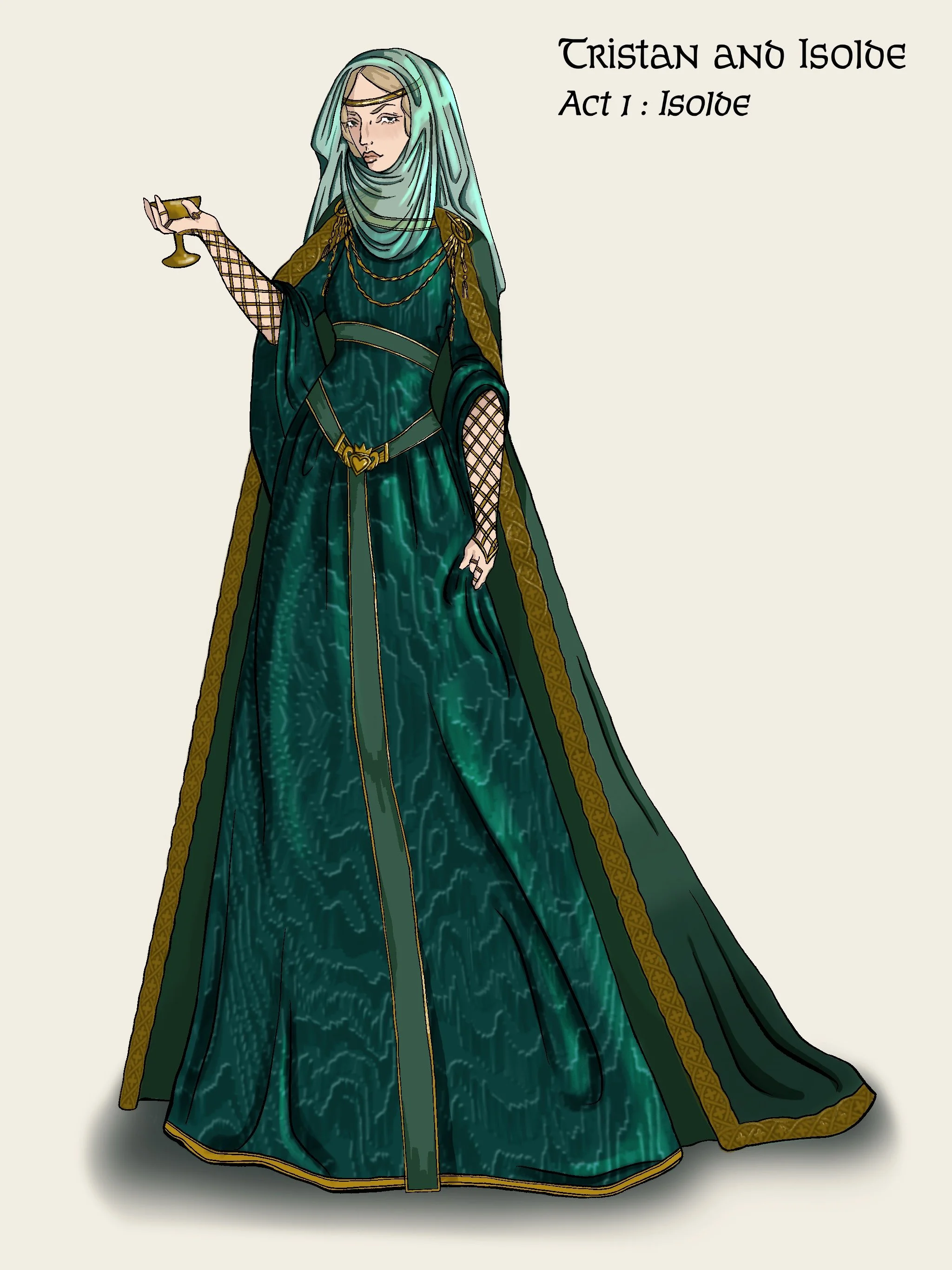
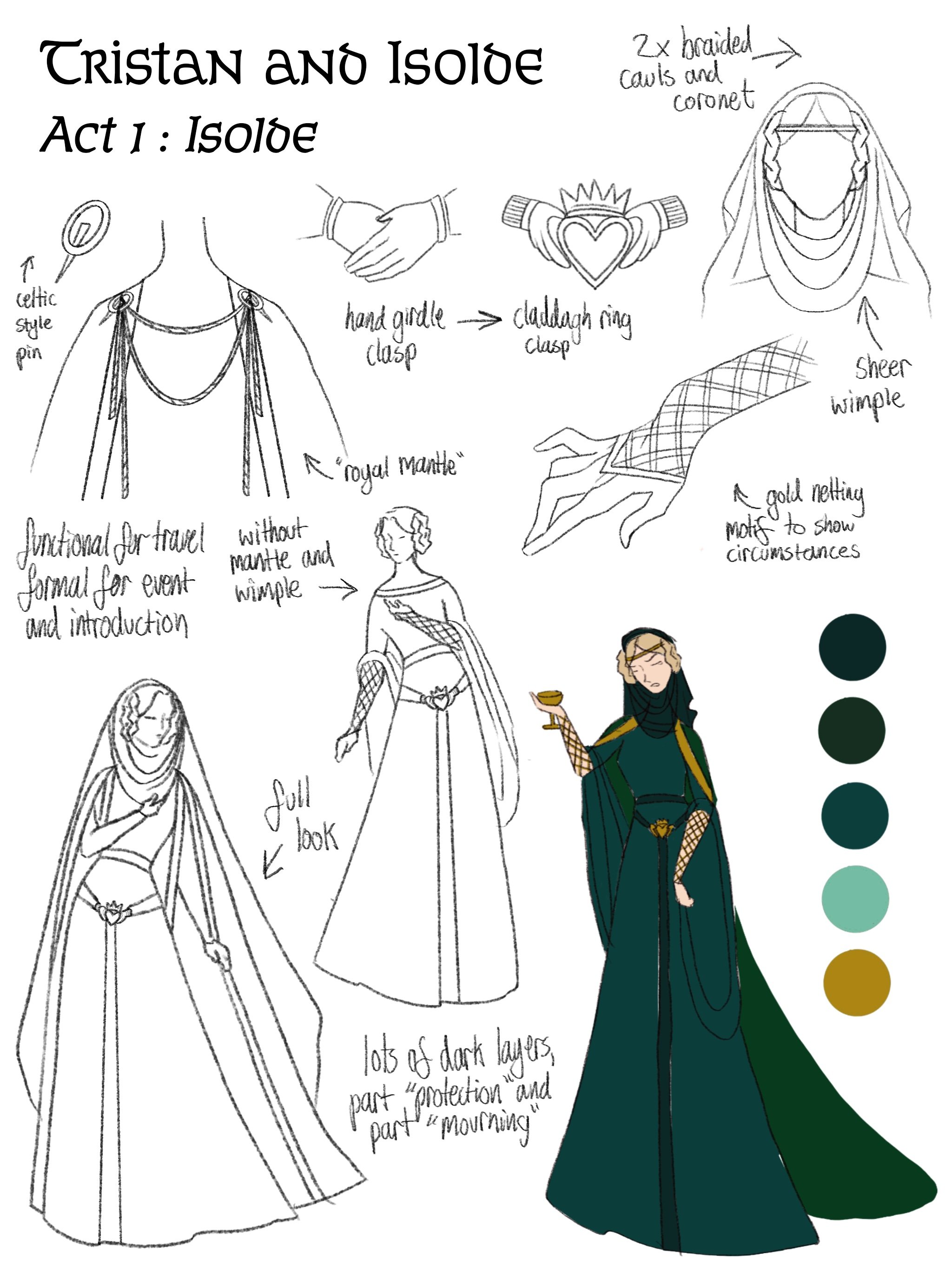
Isolde is dressed in dark, protective layers that emulate mourning, in contrast to the light sheer veil that is alludes to her impending wedding
Isolde is dressed primarily in green and gold as visual ties to her Irish roots, as well as the Claddagh ring reference on the girdle.
The cord connecting the mantle and the nets on her arm are meant to emphasize the constricting nature of Isolde’s situation.
ACT 2
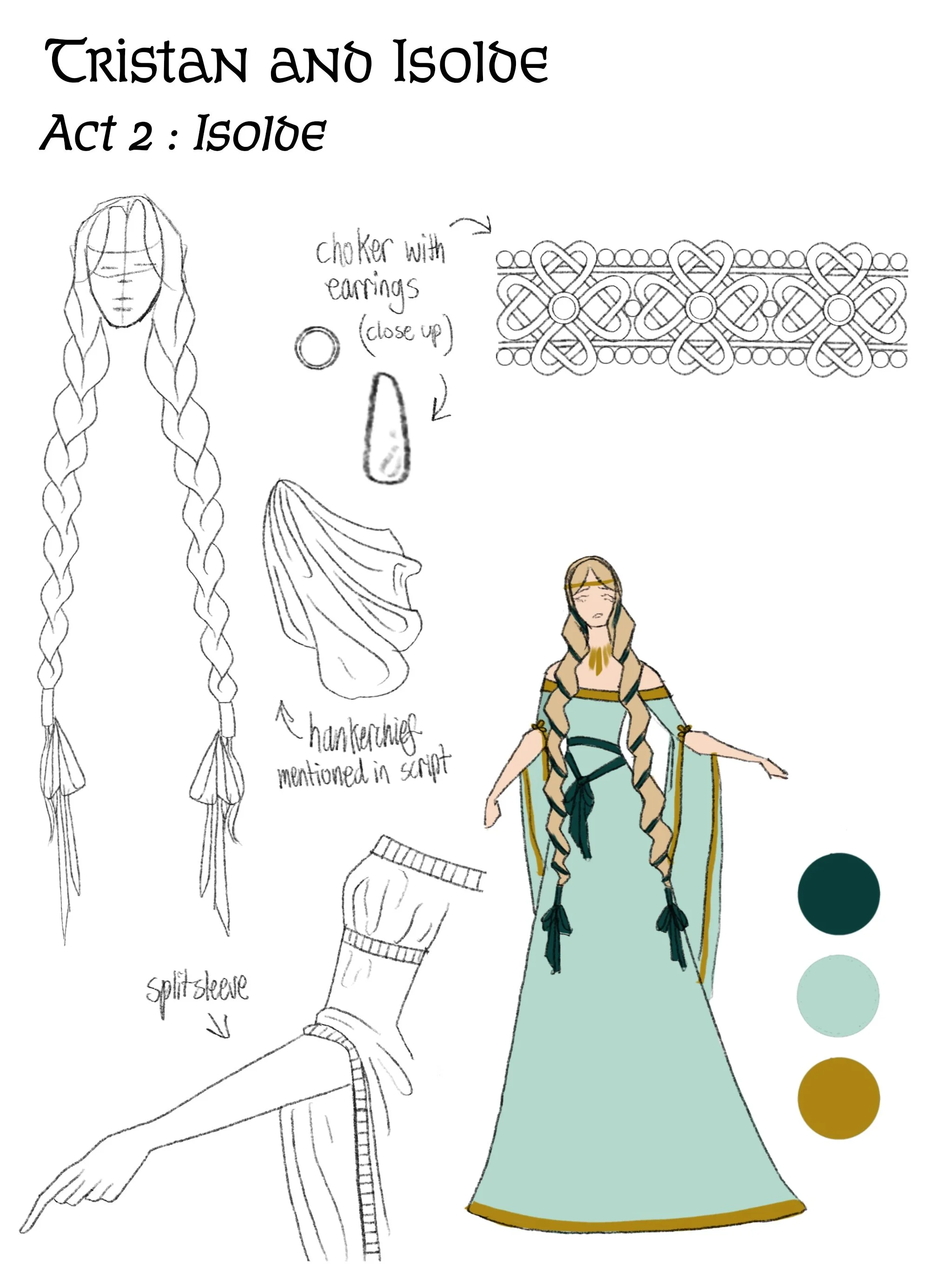
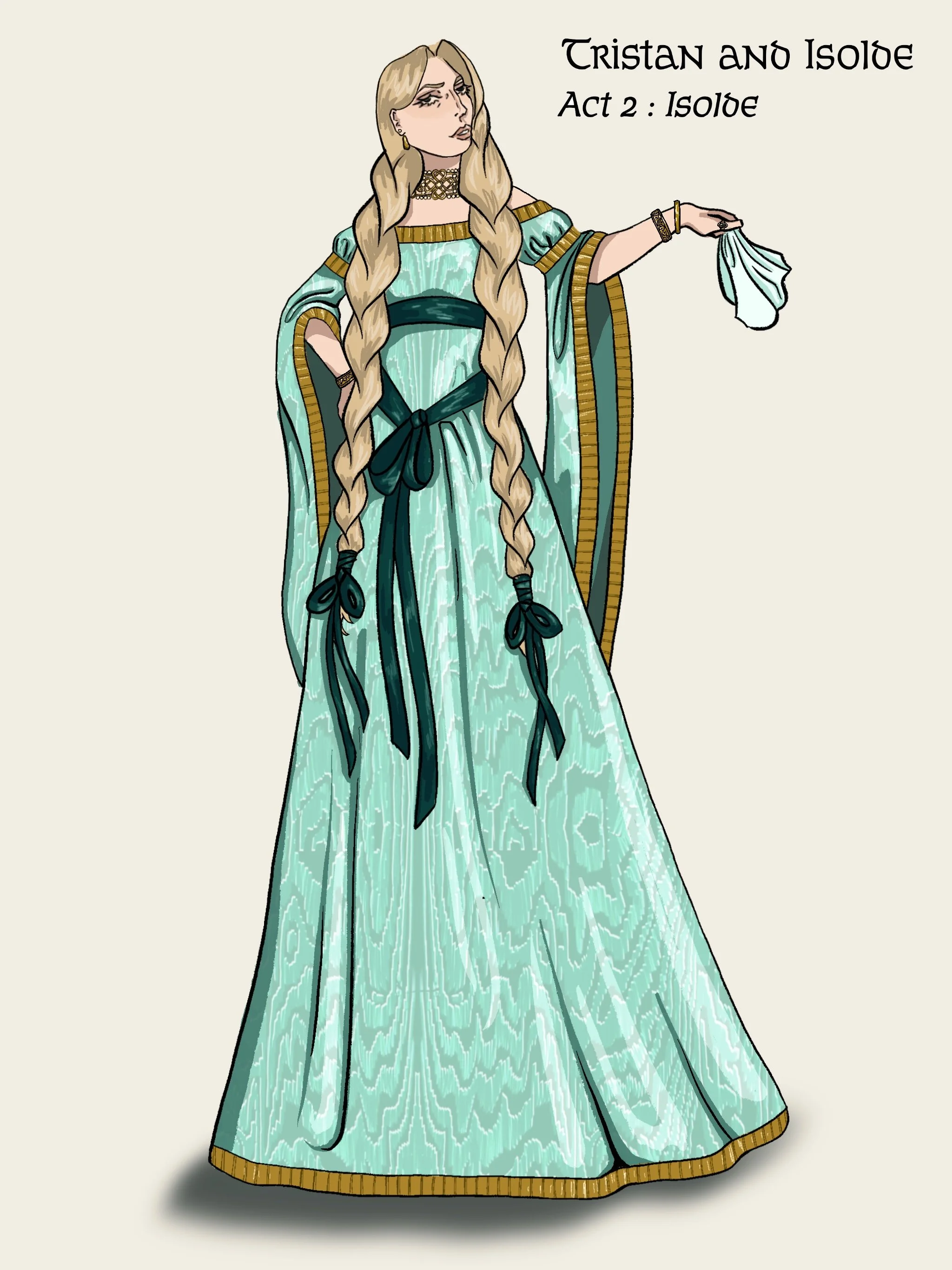
Isolde is in her most youthful, light, romantic look of the opera.
Her hair is done in a more girlish style accentuated by the bows on her plaits and her girdle; contrasting the jewelry of a queen, a coronet and wedding ring are absent.
She is in more teal blue tones associated with Tristan than her signature teal green shade to show her devotion.
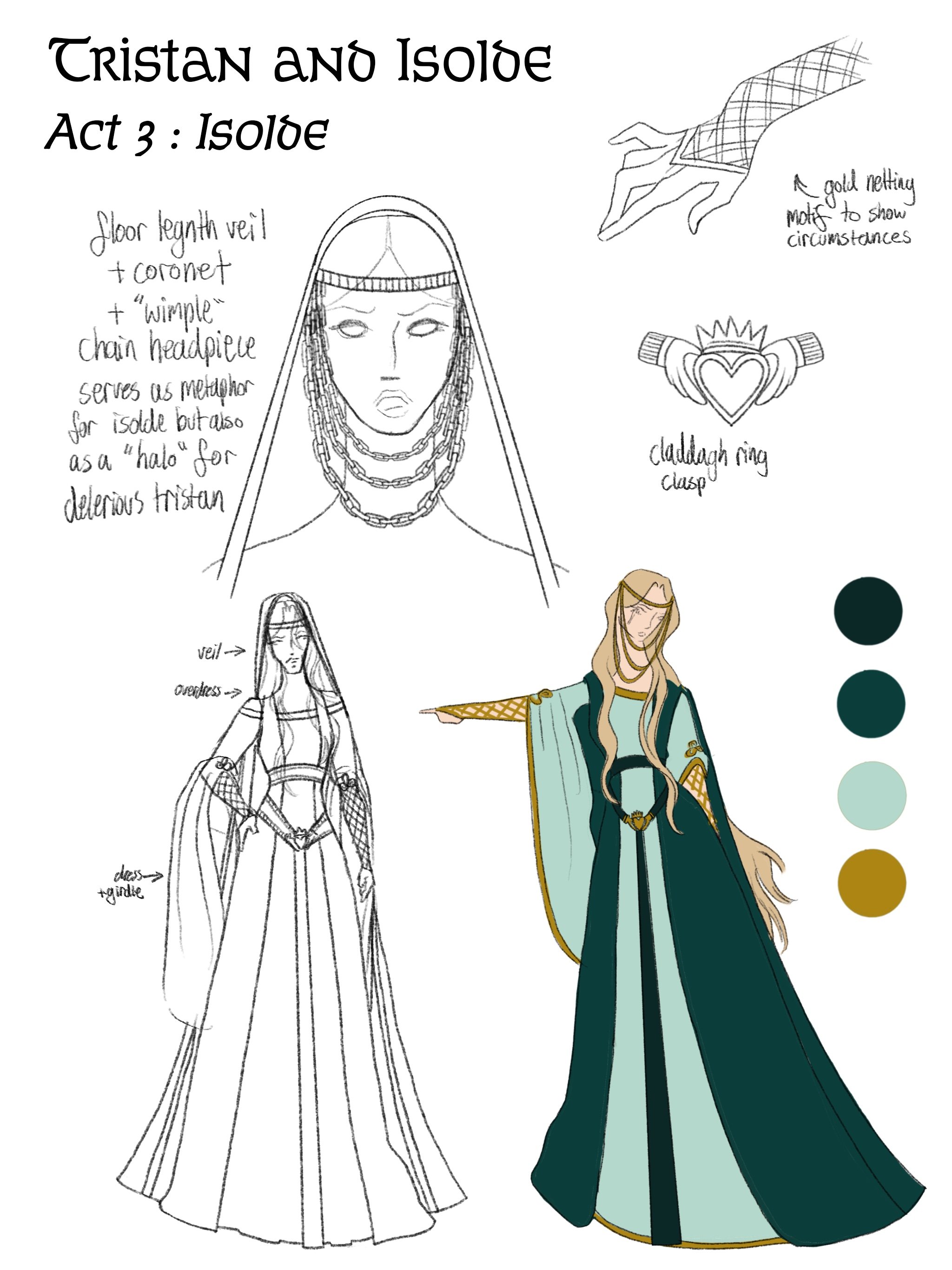
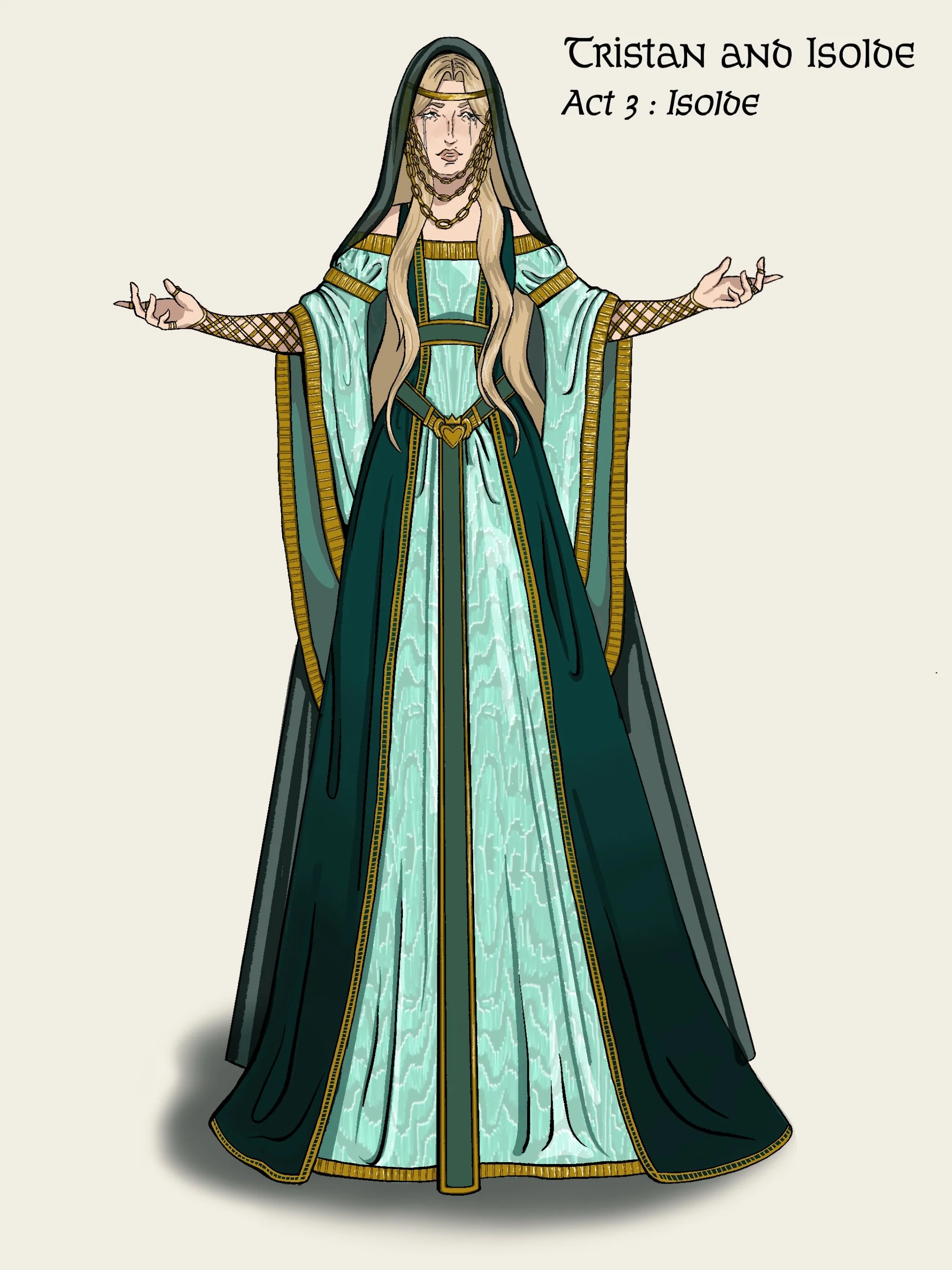
ACT 3
This look is high contrast value and it uses clothing pieces from both acts and come together into one new look
The veil is longer and more romantic, like a wedding veil, but is dark like one worn at a funeral, highlighting dual nature
Headpiece resembles a sort of inverse halo, to a delirious Tristan. The dangling chains with the arm nets reinforce the theme of being trapped within fate referenced in the first act.